


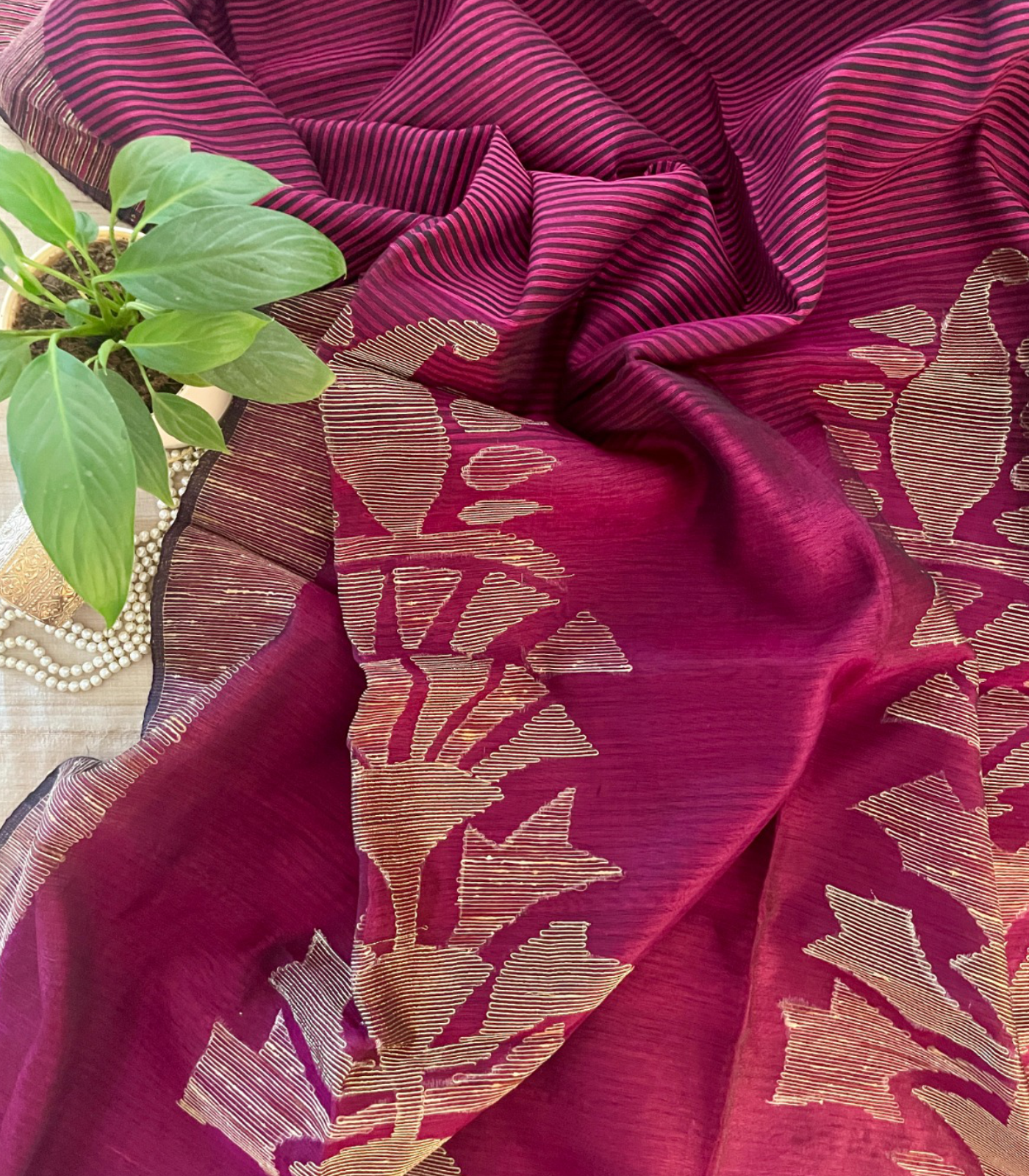
The Exquisite World of Jamdani Sarees: Weaving Dreams in Thread
Jamdani sarees are, to me, the poetry of Indian textiles. They oscillate somewhere between heritage and haute couture—remnants of an ancient craft still woven painstakingly by hand. Every time I study a Jamdani, I’m drawn into a tapestry of history, artistry, and resilience that feels almost sacred.
A Legacy Rooted in Antiquity
The Jamdani weaving tradition dates back to the Mughal era, flourishing particularly on the fertile banks of the river in Bengal. Mustered in centuries-old workshops, the technique uses a supplementary weft, where motifs are deftly inserted onto the loom, thread by colored thread. Historians often marvel at Jamdani’s endurance, especially considering the shifting sands of colonial history and industrialization.
The Art of Weaving: Labor of Love
Watching Jamdani sarees come to life is like witnessing a miracle unfold. Weavers, often working in family clusters, handpick fine cotton or lustrous silk threads to form the sheer base—the legendary muslin. Then, using sketches or instinct, they inlay the motifs freehand, with each saree taking weeks or even months to complete. The most iconic designs—floral vines, paisleys, and geometric scrolls—look as if they’ve been painted onto the fabric, suspended in air.
Regional Flourishes and Motifs
Intriguingly, patterns vary by region:
- West Bengal Jamdani: Renowned for bold, curvilinear motifs and ethereal transparency.
- Peacock, lotus, and fish motifs often symbolize luck and prosperity
- Dhakai Jamdani: Originating on the Bangladeshi side, famous for ultrafine muslin and labyrinthine, all-over patterns
- Some sarees incorporate zari threads, adding a quiet, understated shimmer
More than Aesthetics: Cultural and Social Threads
To drape a Jamdani saree isn’t just a fashion choice—it’s a tribute to the quiet heroism of artisans whose lives are woven into these six yards. For generations, Jamdani weaving has empowered rural communities, especially women, fueling cottage economies and keeping ancient knowledge alive against all odds.
Present-Day Allure and Challenges
Today, Jamdani is enjoying a renaissance. Designers, activists, and saree collectors have banded together to champion the cause of authentic handloom. Still, I worry about the threats this art faces—cheap knock-offs, declining numbers of master weavers, and the struggle for fair wages. But every time I see someone celebrate a genuine Jamdani, I feel a flicker of hope for its future.
My Enduring Fascination
There’s something deeply satisfying about supporting a tradition where beauty-creation takes priority over speed. Every Jamdani saree is a slow, steady antidote to fast fashion—a narrative in thread, awaiting its next admirer.